AI for Small Businesses: Architecting Sustainable Growth, Automation, and Operational Resilience in the Modern Economy
Introduction
The contemporary commercial landscape is undergoing a profound paradigm shift driven by the rapid maturation and democratization of artificial intelligence (AI). Historically, cutting-edge computational technologies, deep machine learning pipelines, and predictive analytics frameworks were the exclusive domain of enterprise conglomerates possessing massive capital resources and dedicated data science departments. Today, that barrier to entry has completely dissolved. Artificial intelligence has transitioned from an experimental luxury into foundational digital plumbing that is accessible to businesses of every scale.
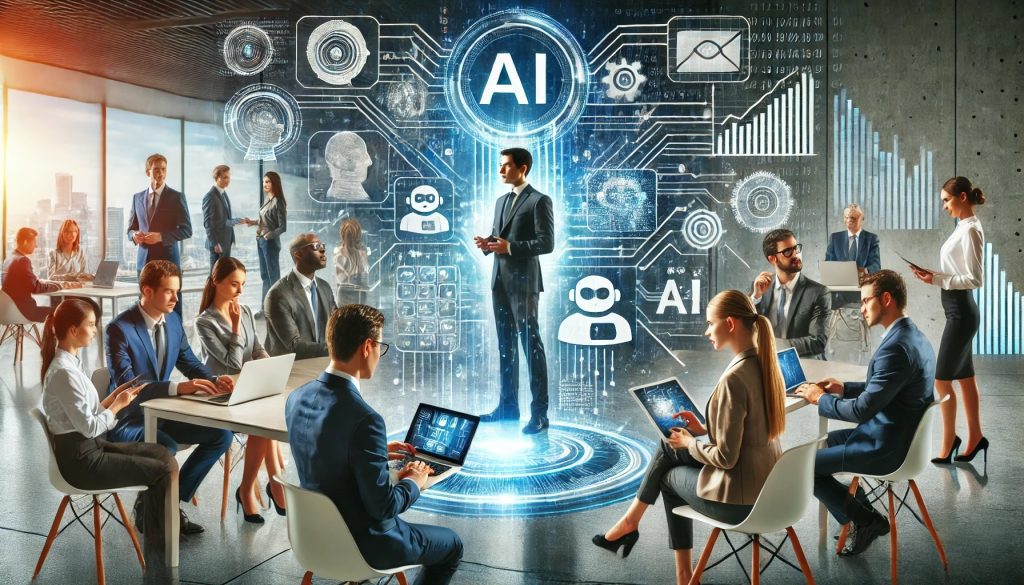
For small and medium-sized enterprises (SMEs), this shift represents an unprecedented strategic inflection point. Small businesses have traditionally operated under structural disadvantages, primarily constrained by finite human capital, restricted budgets, and limited operational bandwidth. However, by intentionally implementing tailored AI architectures, smaller organizations can effectively decouple their revenue potential from linear headcount growth. Artificial intelligence serves as a force multiplier, leveling the competitive playing field and allowing nimble firms to outmaneuver legacy competitors through algorithmic precision, hyper-efficiency, and superior customer engagement.
This paper explores the structural advantages, practical deployment pillars, and strategic considerations of integrating artificial intelligence within the small business ecosystem.
1. The Strategic Imperative: Why Small Businesses Must Embrace AI
In an increasingly digitized economy, staying tethered to legacy, manual workflows is no longer a sustainable business posture. Small businesses frequently battle operational friction—such as time lost to repetitive administrative tasks, inefficient lead nurturing, and a lack of clear data visibility—which ultimately caps their ability to scale. Artificial intelligence addresses these systemic vulnerabilities by introducing autonomous efficiency.
The primary benefit of deploying AI within a small business environment is the optimization of existing resources. Rather than seeking to replace the human element, intelligent systems are designed to automate high-volume, low-variability tasks. This unlocks latent organizational capacity, liberating small business owners and their core teams to focus on high-value, creative, and relationship-driven initiatives that directly move the financial needle. Furthermore, AI reduces the margin for human error in critical areas like data entry, inventory forecasting, and financial compliance, thereby instilling a culture of operational resilience from the ground up.
2. Core Operational Pillars of AI for Small Businesses
To successfully leverage artificial intelligence, small businesses must look past the industry hype and focus on concrete, high-impact functional areas. A comprehensive AI strategy is built upon four foundational pillars:
I. Operations and Workflow Automation
The most immediate return on investment (ROI) for a small business often occurs within daily operations. Intelligent workflow automation tools can seamlessly handle tasks that previously consumed hours of manual labor.
- Bespoke Automation Pipelines: Small businesses can deploy AI to manage invoice processing, automatically extract text and line items from receipts, and reconcile accounts with mathematical certainty.
- Intelligent Scheduling and Communication: AI-driven assistants can manage internal calendars, sort and prioritize client emails, and automatically trigger cross-departmental tasks based on project milestones or customer behaviors.
By delegating these routine processes to automated systems, small firms can operate with the structural agility of a much larger corporation without accumulating burdensome overhead costs.
II. Algorithmic Customer Acquisition and Digital Marketing
Digital marketing has evolved into a highly complex ecosystem governed by shifting algorithms and massive behavioral datasets. For a small business with a limited marketing budget, guesswork can be catastrophic. AI injects mathematical precision into customer acquisition funnels.
- Predictive Audience Insights and Targeting: Machine learning frameworks can analyze historical customer data to identify hyper-specific demographic attributes and purchasing behaviors. This allows small businesses to execute highly targeted ad campaigns, drastically lowering customer acquisition costs (CAC) and maximizing return on ad spend (ROAS).
- Hyper-Personalized Content Workflows: Natural language processing (NLP) models enable small teams to generate tailored email marketing sequences, dynamic website copy, and search-optimized editorial content at scale. By aligning messaging with real-time user intent, small businesses can drastically accelerate their conversion velocity.
III. Intent-Driven Customer Support and Retention
Retaining an existing customer is significantly more cost-effective than acquiring a new one. AI transforms the customer support experience from a reactive bottleneck into a proactive retention tool.
- 24/7 Context-Aware Conversational AI: Modern AI-powered chatbots and virtual assistants go far beyond rigid, rule-based scripts. Utilizing advanced semantic understanding, these systems can autonomously resolve complex customer queries, troubleshoot issues, process returns, and schedule appointments around the clock.
- Predictive Churn Analysis: By tracking engagement touchpoints, purchase frequencies, and customer sentiment across communication channels, AI can alert a business owner when a client is showing signs of disengagement, allowing for timely, targeted intervention.
IV. Predictive Inventory and Data-Driven Decision Making
Cash flow is the lifeblood of any small business, and capital tied up in excess inventory or unoptimized operations can cripple a growing firm. AI introduces clarity into forecasting and decision-making.
- Predictive Demand Modeling: For boutique retail, e-commerce, and localized service providers, machine learning algorithms can analyze historical sales trends alongside external variables—such as seasonal weather patterns, local economic indicators, and market trends—to accurately forecast inventory requirements. This prevents stockouts while simultaneously minimizing capital locked in dead stock.
- Unified Data Analytics: AI can synthesize unstructured data from disparate sources (e.g., social media mentions, web traffic, and point-of-sale systems) into intuitive, real-time dashboards, empowering owners to make high-stakes strategic choices based on data rather than intuition.
3. Comparing Strategic Approaches: Legacy Systems vs. AI-Driven Infrastructure
To visually conceptualize the structural transformation that artificial intelligence introduces, consider the operational differences between traditional small business methodologies and modern, AI-integrated workflows:
| Operational Variable | Legacy Small Business Approach | AI-Driven Small Business Infrastructure |
| Scalability Limit | Strictly linear; scaling requires a proportional increase in headcount and administrative overhead. | Exponential; cloud-optimized intelligent systems handle increased volumes without a linear spike in costs. |
| Customer Engagement | Generalized, one-size-fits-all marketing campaigns with static audience segmentation. | Hyper-personalized, dynamic creative assets that adapt to real-time user behavior and intent. |
| Data Utilization | Historical and reactive; reviewing past financial quarters or monthly reports after the fact. | Predictive and proactive; algorithms forecast market shifts, customer churn, and inventory needs in real time. |
| Resource Allocation | Core personnel spend significant percentages of the workweek on repetitive, low-value administrative tasks. | Automated workflows handle routine data entry and processes, maximizing human capacity for strategic growth. |
4. Navigating the Implementation Journey: Learn, Explore, and Plan
Deploying artificial intelligence successfully requires a deliberate, risk-mitigated roadmap rather than an ad-hoc adoption of fragmented tools. Small business owners should approach technical transformation through a structured, three-stage framework: Learn, Explore, and Plan.
Phase 1: Learn
The first step is educational. Business leadership must look past superficial industry jargon to comprehend the foundational mechanics of modern cognitive modeling, automated pipelines, and generative workflows. Understanding what AI can—and cannot—do prevents unrealistic expectations and ensures that subsequent technical investments are anchored in reality.
Phase 2: Explore
During the exploration phase, an organization conducts a comprehensive internal audit of its digital plumbing and operational friction points. The goal is to uncover the specific bottlenecks where automation or predictive data analytics would yield the highest immediate commercial return. This involves mapping current workflows, identifying underutilized first-party datasets, and assessing team capabilities.
Phase 3: Plan
The final phase involves architecting a scalable, phased implementation strategy. Rather than attempting a disruptive, all-encompassing system overhaul, small businesses should prioritize “quick wins”—such as automating a single customer support pipeline or optimization of a primary marketing funnel. The plan must explicitly detail timelines, budget allocations, training milestones for staff, and clear key performance indicators (KPIs) to measure success.
5. Overcoming Ethical, Security, and Technical Pitfalls
While the benefits of artificial intelligence are undeniable, small businesses must navigate unique constraints and risks during implementation.
Data Security and Privacy Compliance
Small businesses are increasingly targeted by cyber threats, and integrating third-party AI models without proper safeguards can create severe vulnerabilities. Organizations must ensure that any proprietary datasets, client communications, or financial records utilized to train or prompt AI models remain strictly secure and private. Implementing airtight defensive architectures and ensuring compliance with global data protection regulations (such as GDPR or CCPA) is paramount to preserving brand trust and avoiding legal liabilities.
Guarding Against Algorithmic Bias and Hallucinations
Generative models and predictive algorithms are only as unbiased and accurate as the data upon which they were trained. Small businesses must establish rigorous quality control mechanisms to audit AI-generated outputs—whether they are public-facing marketing copy or internal data analyses—to ensure absolute technical accuracy, brand consistency, and ethical alignment.
Mitigating Technical Fragmentation
Adopting too many disconnected, off-the-shelf software-as-a-service (SaaS) AI tools can lead to a fragmented digital ecosystem, driving up licensing costs and creating siloed information. Small firms should prioritize interoperable solutions that integrate seamlessly with their existing customer relationship management (CRM) systems, enterprise resource planning (ERP) software, and core databases.
Conclusion
Artificial intelligence is no longer a futuristic concept reserved for tech giants; it is an active, vital catalyst for small business survival and dominance. By establishing robust automated workflows, utilizing algorithmic marketing precision, and leveraging predictive data analytics, small businesses can achieve levels of operational efficiency and market responsiveness that were completely unimaginable a decade ago.
The transition to an intelligent operational model demands strategic foresight, a commitment to security, and a structured implementation plan. However, for those small businesses willing to learn, explore, and purposefully execute an AI-driven vision, the rewards are clear: unlocked organizational capacity, accelerated revenue growth, and permanent resilience in a rapidly evolving global marketplace. The future does not belong merely to the largest corporations, but to the most intelligent and adaptable ones.