AI Workflow Integration: Architecting Seamless, Secure, and Scalable Enterprise Automation
Introduction
The contemporary enterprise is defined by a paradox of complexity. As organizations undergo digital transformation, they accumulate an expansive matrix of specialized software-as-a-service (SaaS) tools, legacy databases, and communication platforms. While these applications solve localized friction points, they frequently operate in isolation, resulting in fragmented data silos and a high volume of manual, repetitive tasks that drain human cognitive capacity. The modern challenge is no longer a lack of software capability, but a lack of structural connectivity.
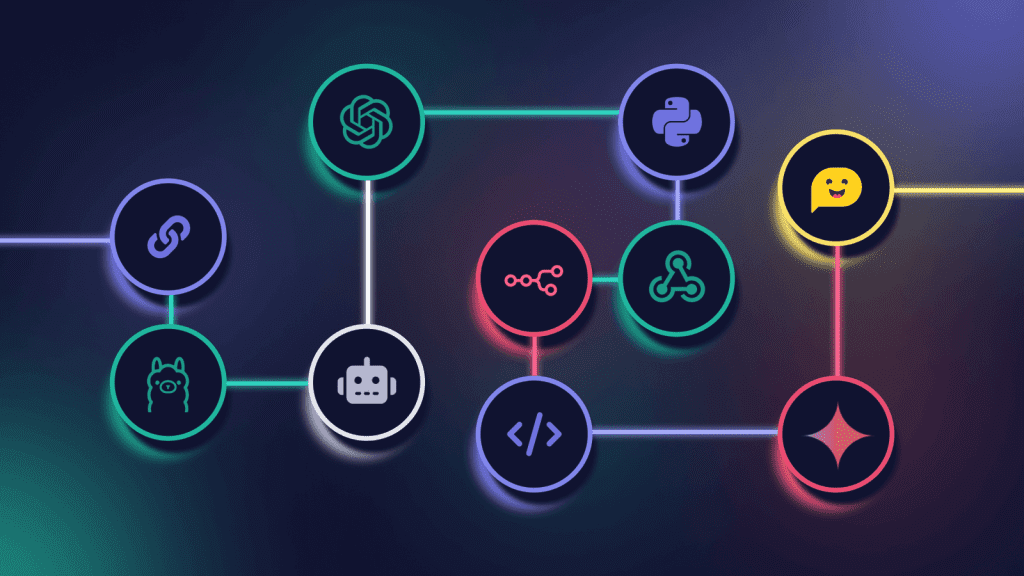
Artificial intelligence (AI) has emerged as the definitive solution to this systemic fragmentation. Unlike traditional, rigid automation software that relies on static rules and explicit programming, advanced AI frameworks possess the capacity for contextual understanding, adaptive learning, and complex decision-making. “AI Workflow Integration” is the strategic process of embedding machine learning models, natural language processing (NLP) engines, and cognitive automation pipelines directly into the fabric of an organization’s existing operational plumbing.
When executed with engineering precision, AI workflow integration transforms passive software environments into dynamic, unified ecosystems. This paper explores the architectural principles, functional applications, deployment strategies, and critical defensive frameworks required to successfully integrate artificial intelligence into enterprise workflows.
1. The Strategic Imperative of Cognitive Integration
In a hyper-competitive global market, operational velocity and data clarity are paramount. Legacy automated systems—such as classic Robotic Process Automation (RPA)—are brittle. They function flawlessly under unchanging parameters but collapse the moment an input format shifts, an unexpected variable appears, or an unstructured dataset is introduced.
AI workflow integration bridges this gap by introducing intelligence into the automated pipeline. Rather than merely executing linear commands, an integrated AI system can read, interpret, and adapt to incoming data streams. For instance, instead of just moving an email attachment to a folder, a cognitive workflow can open a document, comprehend its legal or financial context, extract high-consequence line items, cross-reference them with a core database, and automatically route the verified information to the appropriate decision-makers.
By transitioning from mechanical automation to cognitive integration, enterprises achieve a profound decoupling of operational capacity from linear headcount growth. The human element is not discarded; rather, it is elevated. Staff are liberated from the cognitive tax of routine data manipulation, allowing them to redirect their bandwidth toward strategic problem-solving, creative innovation, and high-value client relationships.
2. Core Architectural Pillars of AI Workflows
To build resilient, predictable, and highly efficient AI-integrated workflows, organizations must move past superficial software wrappers and anchor their strategy in sound data engineering. A robust architecture rests upon three core pillars:
I. Data Engineering and Pipeline Orchestration
An AI model is only as effective as the data flowing through it. AI workflow integration requires the construction of secure, clean, and continuous data pipelines that aggregate unstructured, semi-structured, and structured data from disparate enterprise systems. This infrastructure must handle ingestion, normalization, and vectorization in real time, ensuring that the machine learning models receive high-fidelity information without latency or data corruption.
II. Contextual Awareness and RAG Systems
To prevent the common technical pitfall of AI “hallucinations”—where a model generates inaccurate or irrelevant outputs—integrated workflows must utilize specialized knowledge retrieval systems. Techniques such as Retrieval-Augmented Generation (RAG) anchor the AI’s cognitive reasoning within the organization’s verified, private data repositories. This ensures that every automated communication, document summary, or analytical forecast is grounded in strict, domain-specific truth.
III. System Interoperability and API Abstraction
A successful integration does not require a disruptive, total overhaul of an enterprise’s legacy IT stack. Instead, it relies on sophisticated API (Application Programming Interface) abstraction layers. The AI serves as an intelligent connective tissue, communicating seamlessly between modern cloud-optimized applications, enterprise resource planning (ERP) platforms, customer relationship management (CRM) software, and legacy mainframe architectures.
3. Comparative Operational Dynamics: Disconnected vs. AI-Integrated Ecosystems
To visually conceptualize the structural transformation introduced by deep workflow integration, consider the fundamental operational differences across key enterprise metrics:
| Operational Variable | Disconnected Software Environment | AI-Integrated Enterprise Workflow |
| Data Ingestion | Manual data entry, file format conversions, and fragmented cross-referencing between isolated tools. | Automated, multi-channel ingestion with instant semantic extraction and unified data reconciliation. |
| Process Resilience | Low; minor changes in input files, document layouts, or API schemas break the automation pipeline. | High; cognitive models adapt to variable formats, unstructured text, and shifting operational parameters. |
| Response Velocity | Bound by human availability; processing customer requests, support tickets, or approvals incurs lag. | Instantaneous and continuous; 24/7 intelligent routing, autonomous resolution, and high-velocity triaging. |
| Resource Efficiency | Core personnel spend significant percentages of the workweek acting as human software bridges. | Personnel focus entirely on human-in-the-loop oversight, strategic validation, and business growth. |
4. Functional Applications Across the Enterprise Landscape
AI workflow integration yields profound structural advantages across diverse functional departments, translating abstract computational power into decisive commercial assets:
Operations and Logistics Optimization
In supply chain management and backend operations, integrated AI pipelines monitor real-time variables—such as inventory depletion rates, shipping delays, and historical demand data. By automating the synthesis of this data, the system can automatically trigger purchase orders, re-route logistics corridors, and balance inventory loads across multi-regional distribution hubs with mathematical certainty, preventing costly bottlenecks before they manifest.
High-Velocity Client Engagement and Marketing
Within marketing and sales pipelines, integrated AI workflows eliminate manual lead qualification. As prospective clients interact with digital assets, machine learning models analyze their real-time behaviors, historical touchpoints, and firmographic data to score leads instantly. The workflow can then dynamically generate hyper-personalized outreach sequences, tailor product recommendations, and route high-value sales opportunities directly to account executives, drastically accelerating conversion velocity.
Autonomous Customer Support Ecosystems
Customer support operations are frequently plagued by high volume and repetitive friction. Integrated conversational AI models step past rigid, rule-based scripts to provide nuanced, context-aware support. Because these systems are integrated directly into billing databases, shipping logs, and CRM platforms, they can autonomously resolve complex, multi-step customer inquiries—such as processing secure returns, updating account permissions, and troubleshooting technical infrastructure—without requiring human intervention unless escalated.
5. Strategic Deployment Framework: A Phased Roadmap
Deploying integrated AI architectures requires a deliberate, risk-mitigated strategy rather than an ad-hoc, chaotic adoption of fragmented tools. Organizations should execute transformation through a structured, three-phase framework:
Phase 1: Learn and Assess
The initial phase demands comprehensive education and an objective structural audit. Executive leadership and technical teams must thoroughly understand the modern AI landscape—demystifying cognitive computing, neural networks, and automated workflows. Concurrently, the organization must map its existing digital plumbing to identify underutilized datasets, operational bottlenecks, and manual processes that incur high human-capital costs.
Phase 2: Explore and Prototype
During this phase, the enterprise isolates specific, high-impact friction points to run controlled, low-risk pilot programs. The goal is to establish proof of concept by building micro-integrations—such as automating an internal compliance review or integrating an intelligent triaging system into a primary customer inbox. This allows the engineering team to measure initial return on investment, test API stability, and gauge user adoption.
Phase 3: Plan and Scale
Armed with empirical data from successful prototypes, the organization designs a comprehensive, multi-year implementation roadmap. This plan details precise technical specifications, scaling metrics, cross-departmental rollouts, staff training timelines, and clear key performance indicators (KPIs). Scaled deployment must prioritize modularity, ensuring that new AI components can be added or updated without destabilizing the broader enterprise architecture.
6. Securing the Pipeline: Defending Data and Algorithmic Integrity
In an interconnected digital economy, intelligence without absolute security is a catastrophic liability. Integrating artificial intelligence introduces unique threat surfaces that demand airtight defensive architectures.
Data Privacy and Cryptographic Isolation
Enterprises handle massive volumes of proprietary data, intellectual property, and regulated personal information. When integrating AI workflows, data pipelines must utilize strict end-to-end encryption protocols and robust Public Key Infrastructure (PKI) frameworks. Proprietary datasets used to condition or prompt models must be cryptographically isolated, ensuring that sensitive information never leaks into public training pools or unauthorized third-party environments.
Rigid Compliance Metrics and Human-in-the-Loop Oversight
To maintain strict regulatory alignment (such as GDPR, HIPAA, or CCPA), integrated AI systems must feature robust auditing mechanisms. Every algorithmic decision, data transition, and automated output must be logged in an immutable audit trail. Furthermore, high-consequence workflows—such as financial transactions, legal contract execution, or medical data routing—must implement a permanent “human-in-the-loop” framework. In this paradigm, the AI acts as an elite analytical engine, but final verification and executive authority remain strictly with human experts.
Mitigating Model Drift and Degradation
AI models are not static; their performance can degrade over time due to shifts in real-world data distributions, a phenomenon known as model drift. Integrated workflows must include automated monitoring layers that continuously evaluate model outputs for accuracy, bias, and performance drop-offs. If a pipeline detects a deviation from established performance baselines, it must automatically flag the system for retraining or trigger an immediate fail-safe protocol to protect operational integrity.
Conclusion
AI workflow integration is no longer an experimental luxury or an optional technical upgrade; it is the definitive foundation of modern enterprise resilience and market dominance. By seamlessly binding disparate software layers with adaptive cognitive intelligence, organizations can unlock unprecedented operational capacity, eliminate systemic human friction, and translate raw corporate data into continuous strategic value.
The journey toward a fully integrated, intelligent enterprise requires rigorous engineering precision, strategic patience, and an unyielding commitment to data security. However, for those forward-thinking organizations that deliberately learn, explore, and plan their cognitive transformation, the ultimate outcome is clear: the architecture of a highly agile, predictive, and permanently scalable powerhouse engineered to dominate the digital frontier of tomorrow.